
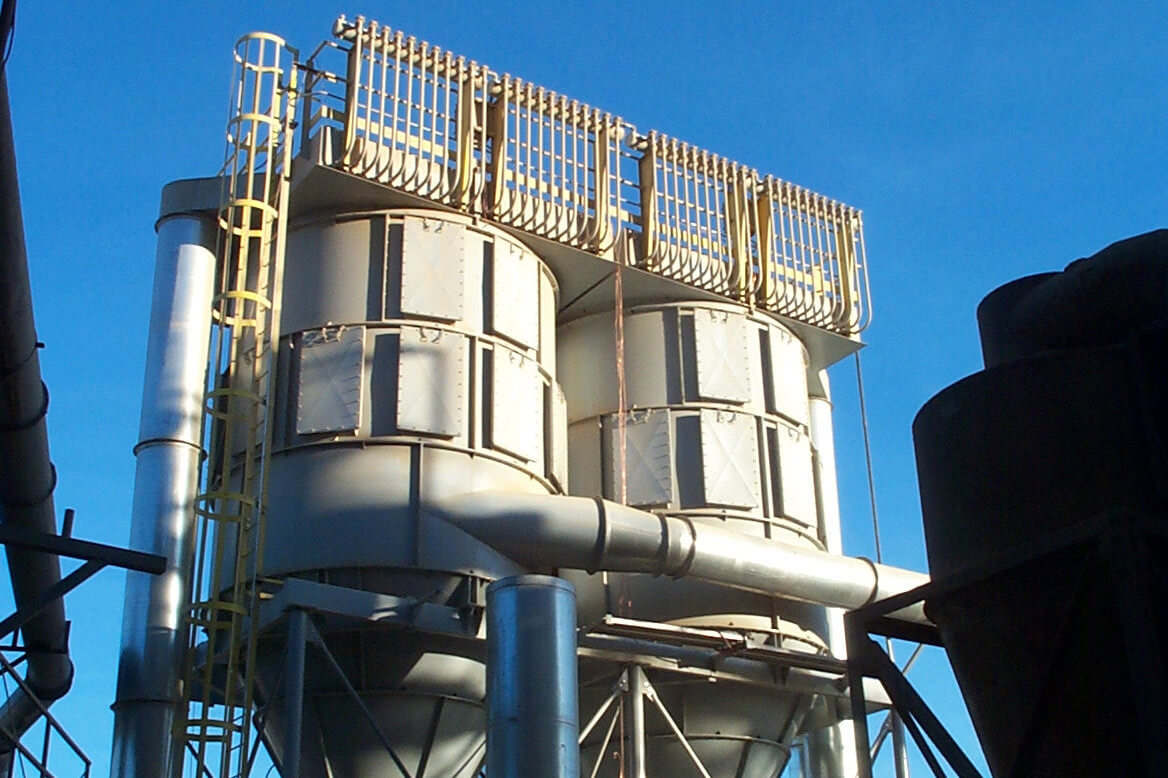
Spark Arrestors for Welding, Grinding, Cutting, and Thermal Processing Systems
Spark arrestors are passive, no-moving-part devices installed between spark-generating processes and your baghouse or cartridge collector. They are an NFPA-recommended component of any dust collection fire prevention system, and Environmental Pneumatics sizes and configures every unit for your specific duct diameter and application.
Key Highlights:
- Inline installation between spark source and dust collector in existing ductwork
- Passive fire prevention with no moving parts and minimal maintenance requirements
- Sized and configured for your specific duct diameter and spark-generating application
How Do Spark Arrestors Prevent Fires in Dust Collection Systems?
Welding, grinding, cutting, and thermal processing generate sparks that travel through ductwork carried by the same airstream feeding your dust collector. Inside the collector, those sparks meet accumulated dust on filter media and in hoppers. Spark arrestors break that chain by creating turbulence that strips heat from each spark, forcing it against internal surfaces where it extinguishes before reaching the collector.
- Impingement plates and baffles create turbulence that strips heat from sparks
- Cleanout doors provide access for removing accumulated debris without disassembly
- Horizontal or vertical mounting configurations to fit your existing duct layout
Why Choose Environmental Pneumatics for Spark Arrestor Integration?
A spark arrestor is only effective when correctly sized for your duct velocity and positioned properly within your system. Environmental Pneumatics does not sell spark arrestors as standalone accessories. We spec them into your complete dust collection system, accounting for airflow, pressure drop, dust characteristics, and your specific spark-generating processes.
- Sized to your duct diameter and system airflow to minimize pressure drop
- Integrated with your complete dust collection design, not added as an afterthought
- Applications include welding, grinding, cutting, plasma, laser, and thermal spray
Start With a Site Evaluation
Most dust and scrap problems are visible to a trained eye. The issue is that most vendors never bother to look — they quote from a desk and ship a catalog product.
Our engineers come to you. Walk the floor with you. And tell you exactly what they see.
- On-site visit at your facility
- Dust source, airflow & scrap recovery gap analysis
- Compliance exposure review (OSHA / NFPA / EPA)
- Written summary of findings — no obligation
Schedule Your Walkthrough
Complete this form and we'll be in touch within one business day.
"*" indicates required fields
Frequently Asked Questions
What applications require a spark arrestor on a dust collection system?
Any system drawing air from welding, grinding, cutting, plasma, laser, thermal spray, or other spark-generating processes needs inline spark protection to prevent embers from igniting combustible dust inside the collector.
Can a spark arrestor guarantee 100% spark control?
No spark arrestor can guarantee complete spark elimination, as they are one component of a comprehensive fire prevention strategy that may also include spark detection and suppression systems, abort dampers, and proper static grounding per NFPA standards.
What is the difference between a spark arrestor and a drop out box?
A drop out box uses gravity to remove heavy debris from the airstream, while a spark arrestor specifically targets hot particles by creating turbulence that strips their thermal envelope, since buoyant sparks pass through gravity-based separation.
Do spark arrestors create significant pressure drop in the duct system?
Spark arrestors add some pressure drop that varies by design type and duct velocity, which Environmental Pneumatics accounts for in system design so the added resistance does not reduce collector performance or starve airflow at pickup points.