
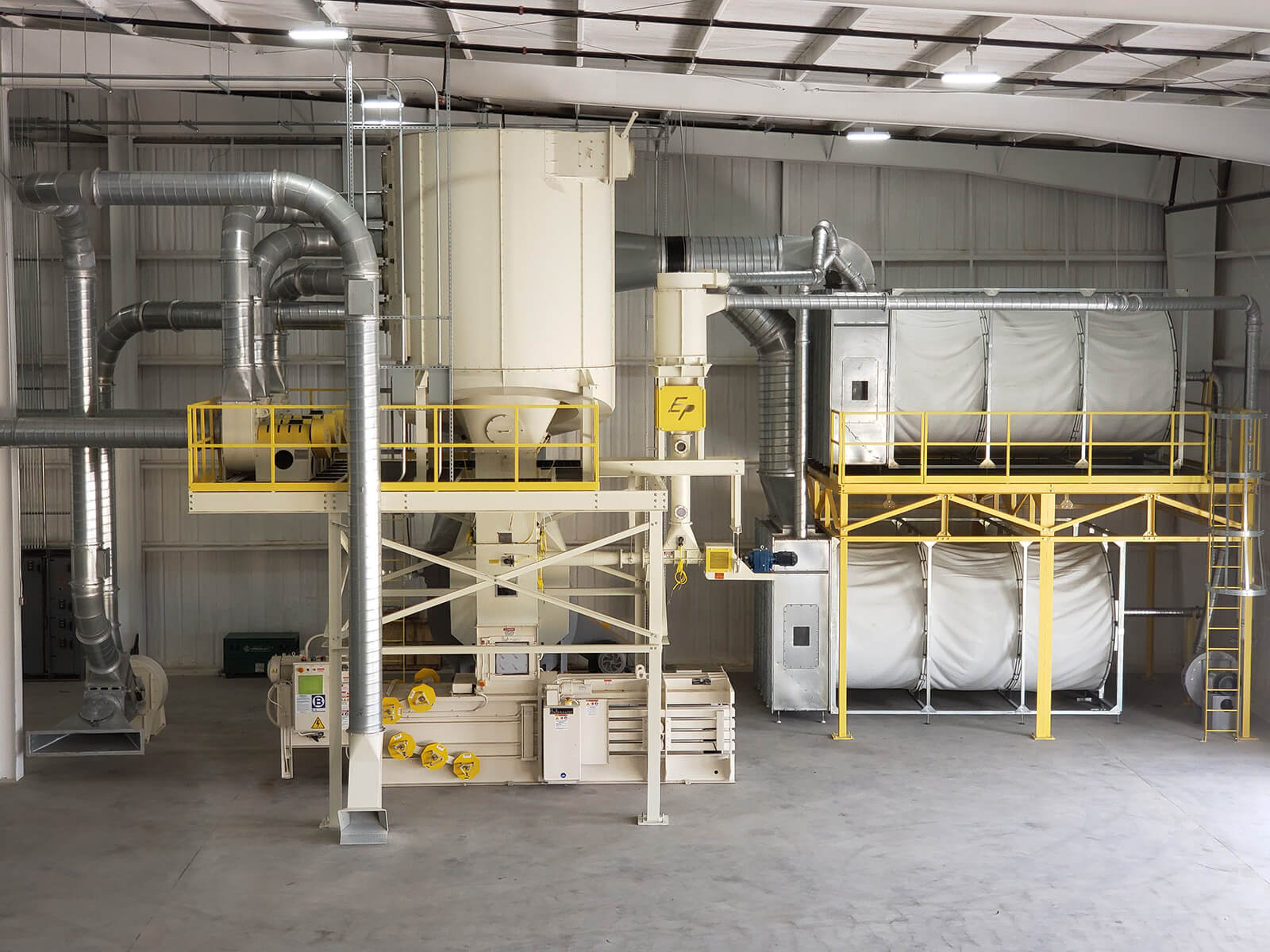
Drum Filters for Paper, Packaging, Textile, and Continuous Production Facilities
Unlike pulse jet or reverse air baghouses, drum filters clean continuously with stable pressure drop and consistent airflow. Rotating suction nozzles inside a stationary drum vacuum dust from the media without interrupting the airstream, making drum filters the standard for high-volume environments where pressure fluctuations affect process quality.
Key Highlights:
- Continuous suction nozzle cleaning eliminates compressed air and pulse jet systems
- Stable pressure drop with no fluctuations during cleaning cycles
- Modular drum design scales to your airflow volume and facility layout
How Do Drum Filters Maintain Consistent Airflow in High-Volume Production?
Pulse jet and reverse air systems create pressure changes during every cleaning cycle. In high-volume paper, tissue, packaging, and textile operations, those fluctuations affect process airflow and product quality. Drum filters clean continuously, and rotating suction nozzles vacuum dust from the media without interrupting the airstream.
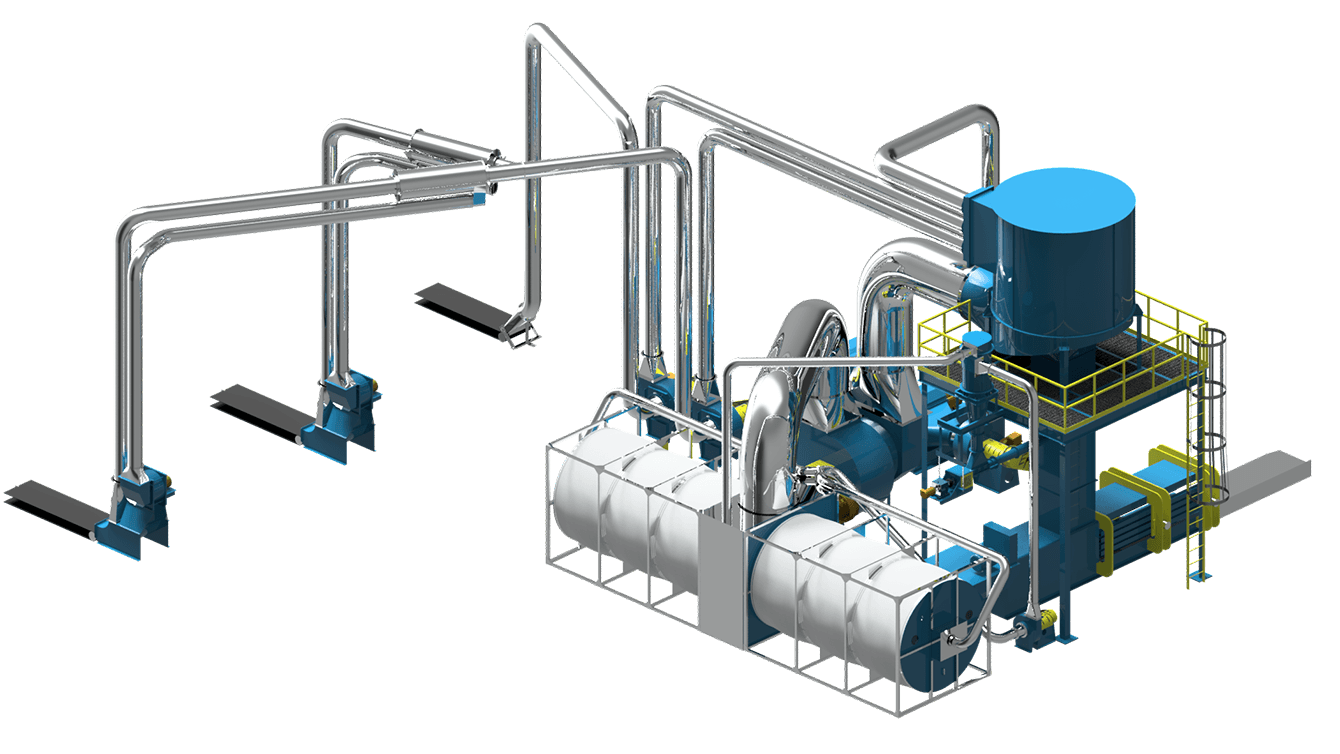
- Suction nozzles rotate and oscillate to clean the entire filter surface continuously
- Separated dust conveyed to a cyclone or collection point for reclaim
- All functional components on the clean air side for safe access
Why Choose Environmental Pneumatics for Drum Filter Systems?
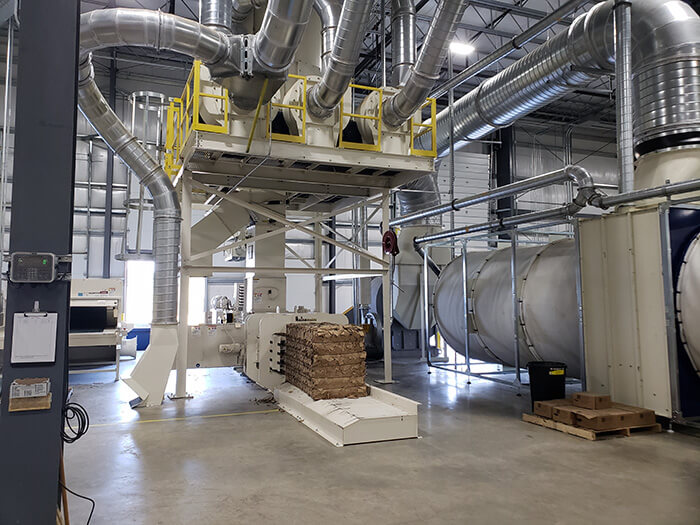
Drum filters are specialized for high-airflow, continuous-production environments. Environmental Pneumatics evaluates whether a drum filter fits your application or whether a pulse jet or reverse air system better matches your dust and facility conditions.
- No sealing problems between dust side and clean air side of drum
- Low energy draw from suction nozzles requiring minimal extraction fan air
- Antistatic configurations with explosion protection available for combustible dust
Start With a Site Evaluation
Most dust and scrap problems are visible to a trained eye. The issue is that most vendors never bother to look — they quote from a desk and ship a catalog product.
Our engineers come to you. Walk the floor with you. And tell you exactly what they see.
- On-site visit at your facility
- Dust source, airflow & scrap recovery gap analysis
- Compliance exposure review (OSHA / NFPA / EPA)
- Written summary of findings — no obligation
Schedule Your Walkthrough
Complete this form and we'll be in touch within one business day.
"*" indicates required fields
Frequently Asked Questions
What is the difference between a drum filter and a pulse jet baghouse?
A drum filter uses rotating suction nozzles to continuously clean media with no compressed air and no pressure fluctuations, while pulse jet uses timed compressed air bursts that momentarily disrupt airflow, making drum filters preferred where constant pressure is critical.
What industries typically use drum filters for dust collection?
Drum filters are common in paper and tissue converting, packaging, textile and nonwoven manufacturing, printing, wood processing, and food production where high airflow and continuous run requirements are standard.
Can drum filters handle combustible dust?
Drum filters are available in antistatic configurations with explosion protection, all functional components sit on the clean air side, and continuous cleaning prevents the dust accumulation that increases fire risk.
Do drum filters require a pre-filter for heavy dust loads?
For airstreams with high fiber or coarse particles, an integrated pre-filter upstream removes heavy material first to protect drum media and extend service intervals, while lighter dust loads run effectively on the drum filter alone.