
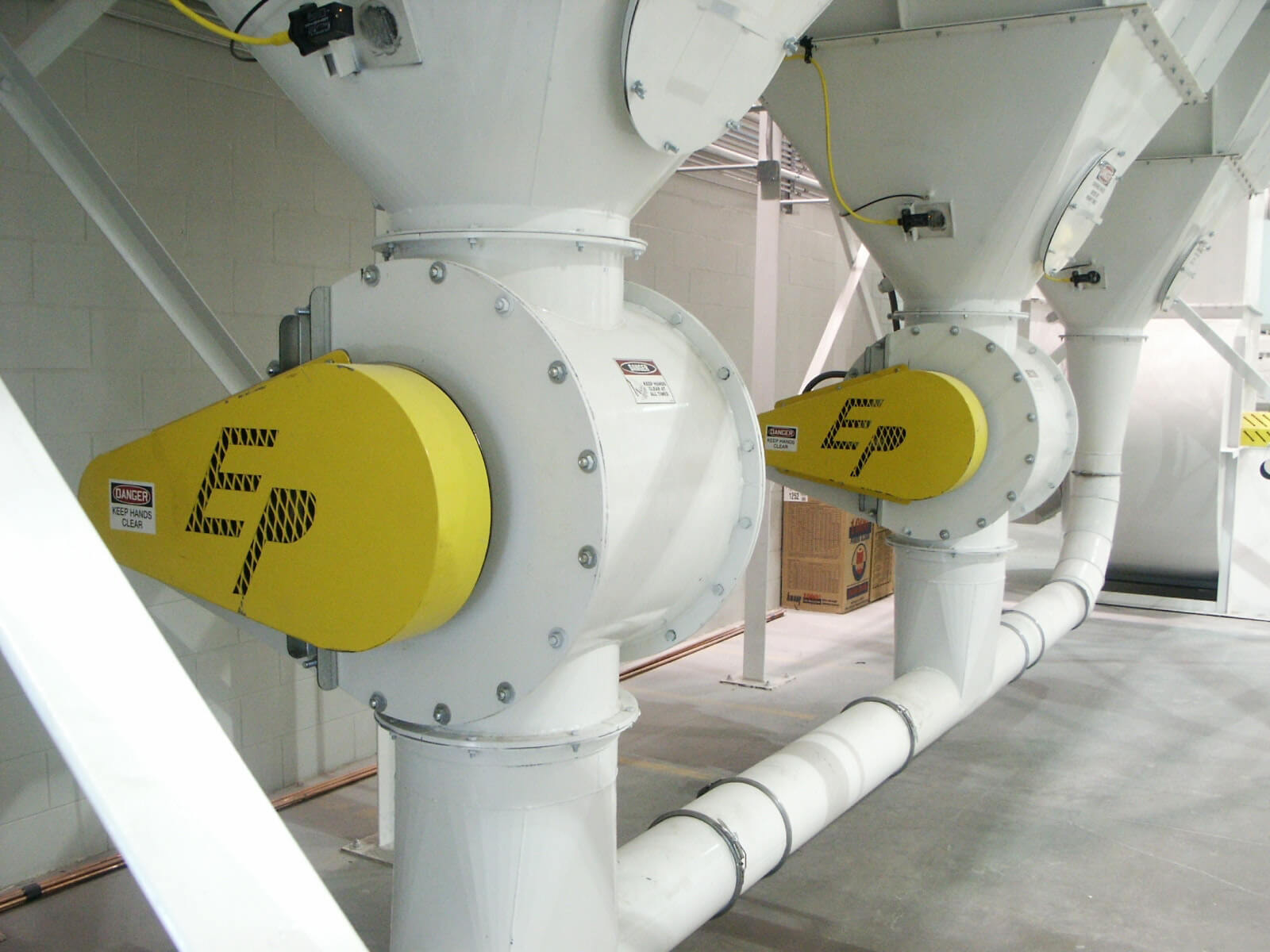
Rotary Air Locks \ Dust Collectors and Pneumatic Conveying Lines
A rotary air lock is the mechanical interface between your dust collector or cyclone separator and the rest of your conveying system. When it is sized wrong for the material or pressure differential, the entire system loses efficiency. Environmental Pneumatics selects and integrates air locks matched to your specific application, material characteristics, and discharge configuration.
Key Highlights:
- Material-matched selection for abrasive, fine, or fibrous particulate
- Integrated sizing for cyclone, baghouse, and hopper discharge points
- Cast iron and stainless steel construction options for varied applications
How Does a Properly Sized Rotary Air Lock Keep Your System Efficient?
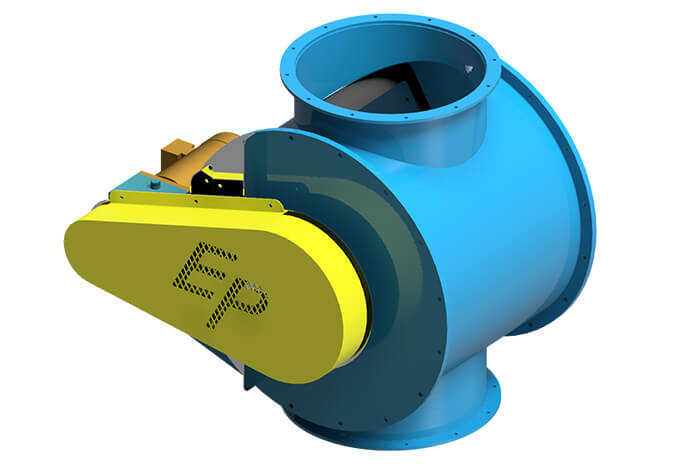
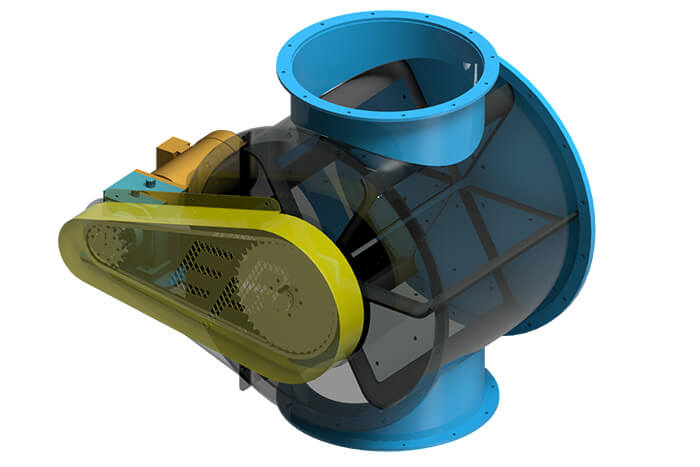
A rotary air lock that does not match your pressure differential and material type bleeds air, loses seal integrity, and forces your fan to work harder than it should. Environmental Pneumatics engineers air lock selection into every system design, accounting for pressure zone, material bulk density, temperature, and rotor configuration so the valve performs as a controlled interface, not a liability.
- Drop-thru and blow-thru configurations selected based on system layout and pressure
- Rotor clearances and tip materials specified to resist wear from abrasive particulate
- Speed-matched drives sized to your required feed rate and system capacity
Why Does Environmental Pneumatics Specify Air Locks as Part of the Full System Design?
Catalog air lock selection without system context produces leakage, premature wear, and pressure drop problems that reduce collection efficiency and increase energy consumption. Environmental Pneumatics specifies air locks as components within a fully engineered system, not as standalone catalog items.
- On-site engineering visits confirm pressure differential, material, and discharge geometry before selection
- Air lock integration verified against cyclone, baghouse, and fan performance parameters
- Memphis-based fabrication and installation team handles the full system, including component coordination
Start With a Site Evaluation
Most dust and scrap problems are visible to a trained eye. The issue is that most vendors never bother to look — they quote from a desk and ship a catalog product.
Our engineers come to you. Walk the floor with you. And tell you exactly what they see.
- On-site visit at your facility
- Dust source, airflow & scrap recovery gap analysis
- Compliance exposure review (OSHA / NFPA / EPA)
- Written summary of findings — no obligation
Schedule Your Walkthrough
Complete this form and we'll be in touch within one business day.
"*" indicates required fields
Frequently Asked Questions
What is a rotary air lock used for in a dust collection system?
A rotary air lock discharges collected material from a dust collector or cyclone hopper while maintaining the pressure differential that keeps the system operating correctly.
What is the difference between a drop-thru and blow-thru rotary air lock?
Drop-thru valves discharge material by gravity into a collection point below, while blow-thru valves feed material directly into a pneumatic conveying line under positive pressure.
How do I know what size rotary air lock I need?
Air lock sizing depends on your material bulk density, volumetric feed rate, pressure differential, and flange dimensions, which is why Environmental Pneumatics evaluates your system before specifying a valve.
Can the wrong air lock damage a dust collection system?
Yes. An undersized or incorrectly configured air lock bleeds air across pressure zones, reducing fan efficiency, degrading collection performance, and accelerating rotor wear.