

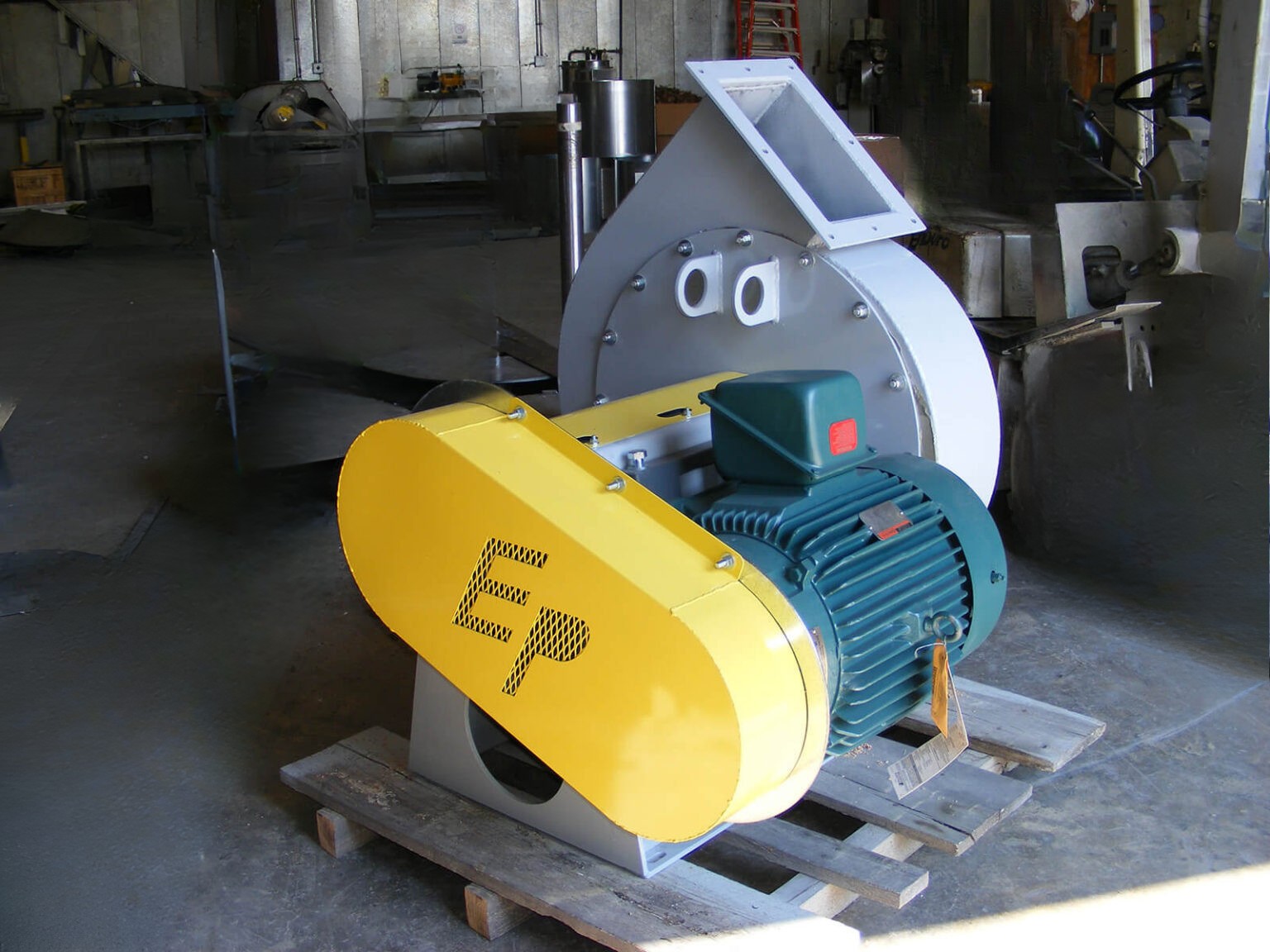
Material Handling Blowers for Dust Collection, Conveying, and Material Transport Systems
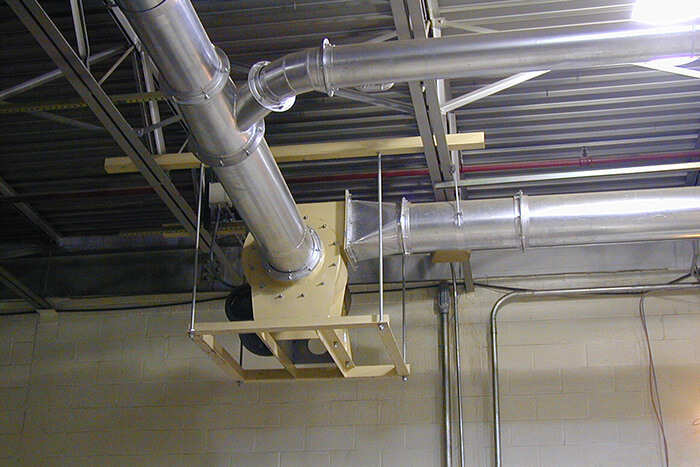
The blower is the engine of every dust collection and pneumatic conveying system. Undersized blowers create low capture velocity at pickup points, allow material to settle in ductwork, and overload filters. Environmental Pneumatics sizes each blower to deliver correct CFM and static pressure for your duct layout, separator, and filter.
Key Highlights:
- Fabricated from heavy steel plate for severe-duty industrial service
- Open radial blade wheels resist clogging from abrasive or fibrous material
- Sized to match your dust collection or conveying system requirements
How Do Material Handling Blowers Drive Dust Collection and Conveying Performance?
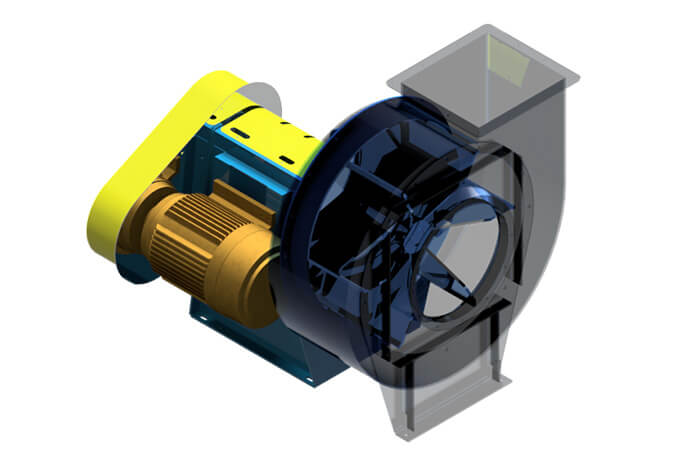
Standard construction includes heavy plate fan housings, open radial blade wheels with plate blades and backplates, double-interlock pillow block bearings, and machine-turned shafts. Belt-drive arrangements allow speed adjustment for changing system conditions, and AR plate wear liners are available for abrasive or corrosive material streams.
- Radial blade wheels generate high static pressure for long duct runs
- Heavy plate construction withstands abrasive material impact over years of service
- Modified blade profiles available for stringy or fibrous material without buildup
Why Choose Environmental Pneumatics for Material Handling Blower Systems?
A blower purchased as a standalone component may meet its own specs but fail in your system. Environmental Pneumatics engineers the blower as part of the complete air system so it delivers the right volume and pressure at the right point, not just on a catalog curve.
- Blowers engineered as part of complete dust collection and conveying systems
- On-site evaluation matches blower selection to actual system resistance
- Single-source responsibility from blower through separator and filter
Start With a Site Evaluation
Most dust and scrap problems are visible to a trained eye. The issue is that most vendors never bother to look — they quote from a desk and ship a catalog product.
Our engineers come to you. Walk the floor with you. And tell you exactly what they see.
- On-site visit at your facility
- Dust source, airflow & scrap recovery gap analysis
- Compliance exposure review (OSHA / NFPA / EPA)
- Written summary of findings — no obligation
Schedule Your Walkthrough
Complete this form and we'll be in touch within one business day.
"*" indicates required fields
Frequently Asked Questions
What is the difference between a material handling blower and a clean air fan?
Material handling blowers use open radial blade wheels that pass material through without clogging and go on the dirty air side, while clean air fans use backward curved or airfoil blades for higher efficiency but cannot handle particulate and go after the filter.
How do I know if my blower is sized correctly for my dust collection system?
The blower must deliver enough CFM for capture velocity at every pickup point and enough static pressure to overcome total system resistance from duct friction, separator drop, filter drop, and discharge.
When should I use abrasion-resistant construction for my blower?
Any time the airstream carries abrasive particulate like metal grindings, mineral dust, glass, or cement, AR plate liners, hardened wheel surfaces, and replaceable scroll sections extend blower life significantly.
Can material handling blowers be retrofitted into existing systems?
EP blowers are configured to match existing mounting, inlet and outlet orientation, and drive arrangement so they drop into your current system footprint without major ductwork modifications.